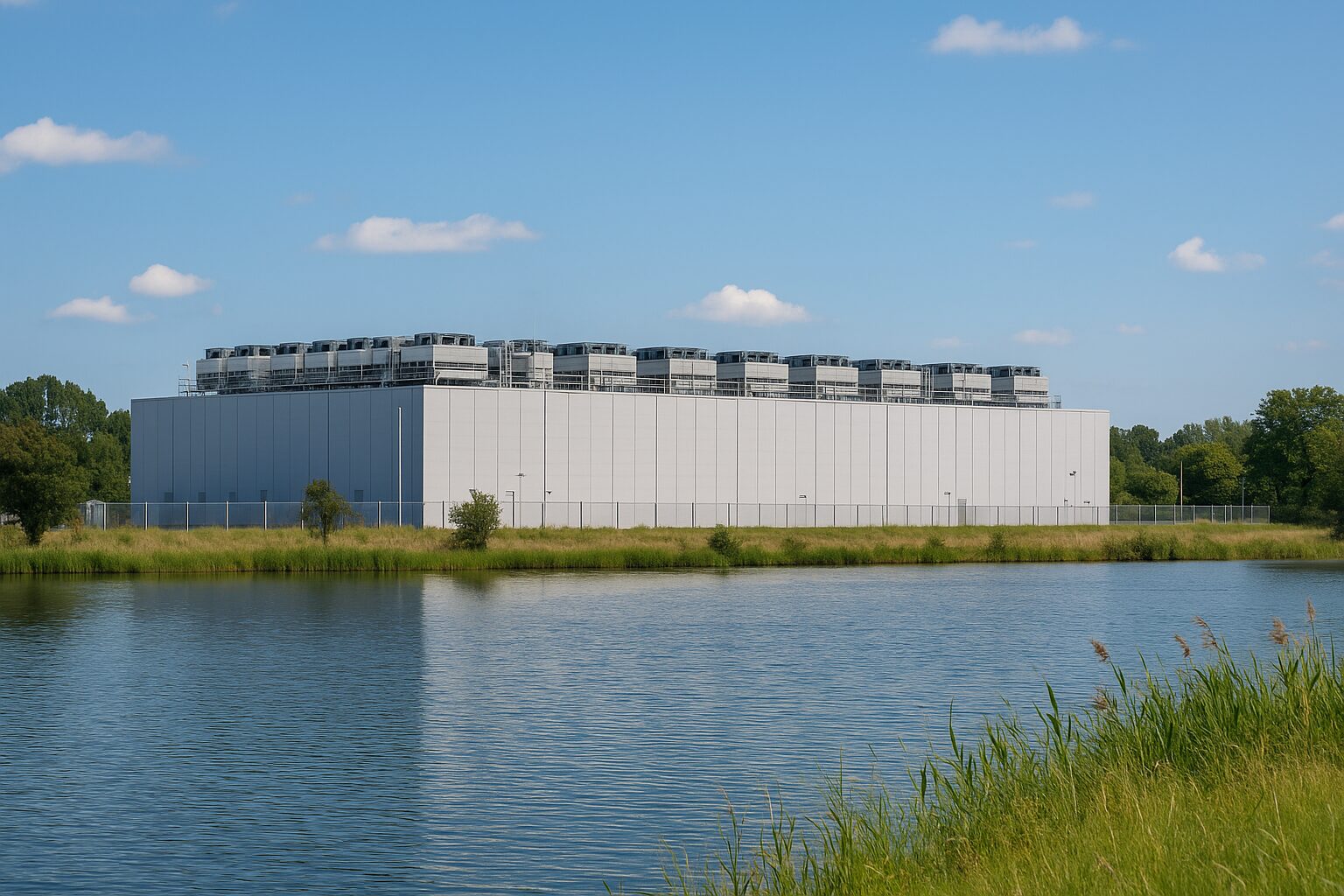
With all this hype around AI every week from some new tool or headline, there is one thing not being talked about enough and that’s the increase of data centers; with the rapid growth of this technology, you can’t have AI without them. These massive facilities are what power all the tech behind the scenes but the problem is, we are building them so fast to keep up with AI’s demand that there are two questions that are not being asked and that is what is this going to do to our environment and our health?
History has shown us every time there is a big industrial or tech push; the environmental and health damage shows up sometimes decades late and by then it is too late.
What History Shows
This is not a new pattern. Every big leap in tech or industry has come with fallout we did not catch until people started getting sick or ecosystems started collapsing.
- The Industrial Revolution ramped up with steam and coal and it was not until cities were drowning in smoke and the water was toxic that people realized how bad it was.
- Coal dust and smog in towns across the U.S. led to serious respiratory diseases especially in places like Pennsylvania in 1948. People couldn’t breathe. Thousands got sick.
- DDT was considered a breakthrough pesticide in the 1940s–50s because it was a cheap, long lasting and powerful pesticide that took out insects. It even controlled malaria and agricultural pests but later it was revealed DDT was linked to cancer, endocrine disruptors and environmental issues.
- Lead in gasoline was promoted to improve engine performance and later it was found out that the particles released through the exhaust contaminated the air, dirt and water systems. Children were affected the most by this because they were still developing and it caused issues like learning disabilities, hearing loss, speech, aggressive behavior. According to the United Nations, lead had officially been eliminated worldwide in 2021.
We are not talking about small mistakes but whole populations breathing in toxins, drinking contaminated water or living on poisoned land because industries moved ahead without checking the long-term risks. That is what happens when there’s more focus on growth than on safety. Why do we think this time is any different?
Human Health Is Always the Last Thing They Think About
Let’s talk about what happens when workers and communities are the afterthought.
- During tunnel construction in West Virginia, workers inhaled heavy silica dust day after day. They were never told that the dust they breathed in would be lethal. The result became the worst lung disease disaster the country has ever seen.
- At Love Canal families unknowingly lived on land laced with buried toxic waste. Schools were built there, children fell ill, parents developed cancer and babies were born with defects. All of this was traced back to chemical dumping that began in 1942 that was ignored for decades.
- Hinkley California was the Erin Brockovich case chronicled in a book and then a movie focused on the community being poisoned by chromium-6 from a power company’s cooling system. The contamination went undetected for years, leaving residents to face Leukemia, Lymphoma, Breast Cancer, Miscarriages, Birth Defects, Kidney Disease, Skin issues and more.
None of these were random mishaps, they were the result of environmental decisions that put speed and scale ahead of human impact. Today as data centers move into small towns and even cities and tapping into already-stressed water systems, the pattern looks all too familiar. There is also a massive energy use, constant cooling and still, no clear plan for long-term oversight or accountability.
If history is an indicator the health impact won’t be obvious right away but give it ten, twenty years? Then we will be connecting the dots after people have already paid the price.
Putting off Today Will Become Tomorrow’s Problem
This isn’t about being anti AI or anti-progress. It is about not falling back into the same build now, worry later attitude. We have seen how that ends and we don’t need progress sold like a buy now, pay later deal; cheap upfront but devastating in the long run.
We need to be asking:
- What’s the long-term environmental footprint of these data centers?
- Who’s monitoring the air and water near them?
- Are there emergency plans if leaks or emissions go wrong?
- How much energy does data centers use?
- How will the power data centers use affect the cost of users within the area?
- Will citizens have an energy ration and if so how will this affect hospitals, schools, children and the elderly?
- Who is accountable for issues that may happen; is it the tech company or the town/city that took the deal?
If something were to go wrong communities are not equipped to absorb the fallout, let alone fight back, when something goes wrong. They get sold on jobs and infrastructure, but not told the full story. Once these things happen it’s always the same thing: lawsuits, delays, blame and families left abandoned. These are things that should not be ignored.
Those Who Ignore History Inherit Consequence
If we fail to study the infrastructure behind AI, we risk adding to a long legacy of environmental harm that communities are still paying for today. Data centers may seem quiet and harmless but their water use, energy draw and waste don’t disappear. If we have learned anything from history, it is: when an industry races ahead without oversight, people suffer.
This is why places like Love Canal, Hinkley and the Virginia mines became cautionary tales instead of success stories.
_________________________________________________________________________________________________________________
Shaunta Garth is a Strategic Communications & Visibility Architect specializing in digital storytelling, media strategy and public affairs.