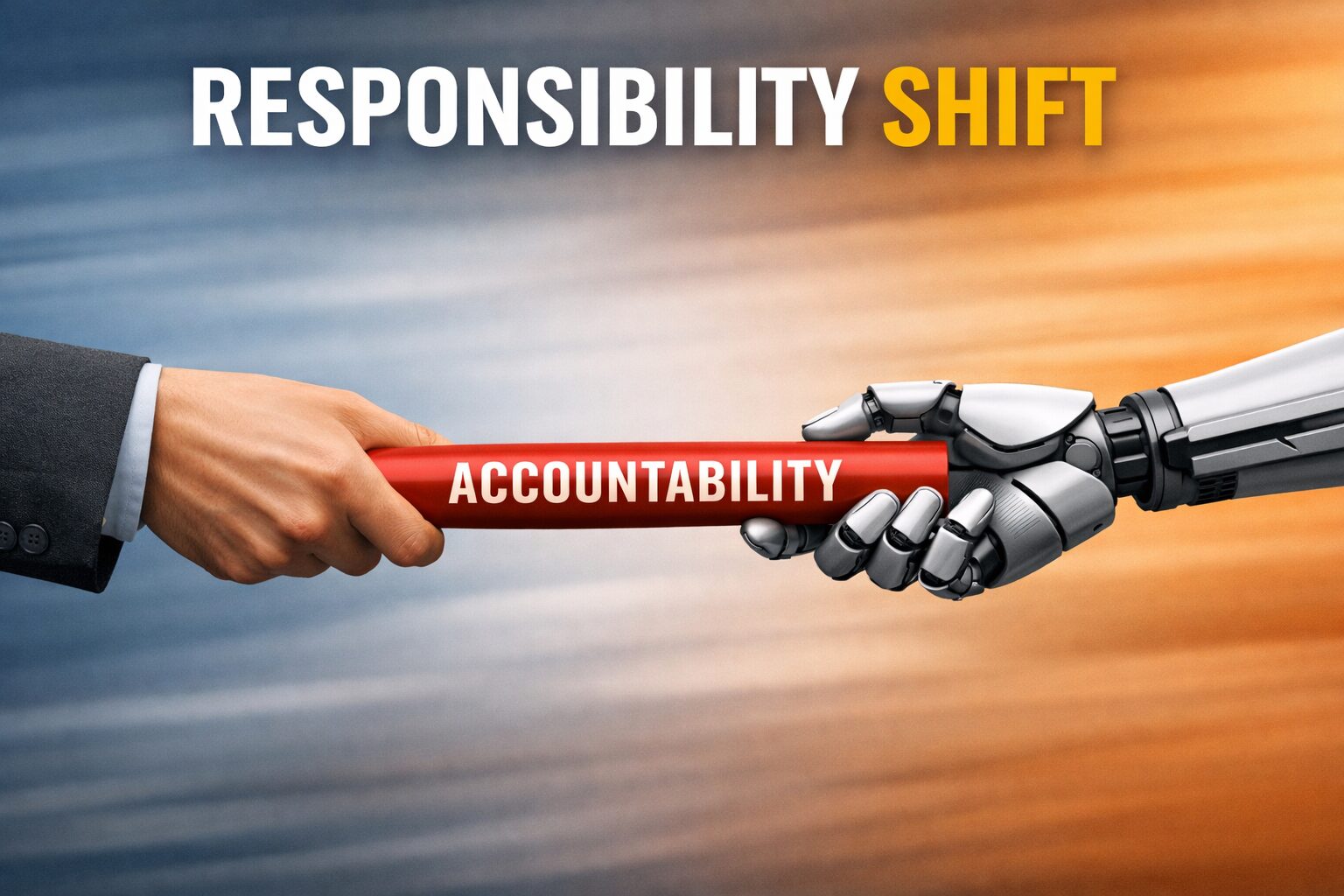
Connext Global Solutions recently released a 2026 AI Oversight Survey. The polled 1000 adults who used AI at work in the U.S. They found 17% of U.S. adults believe workplace AI is reliable without human review. This might sound like a small number at first but it is actually a signal of the rise of responsibility shift.
AI is a tool, it is not a decision-maker, it cannot pass judgment or assume accountability. When 17% of people feel AI is reliable without review, it tells me there is a growing mindset that treats AI like it is infallible or at least “good enough” to publish without stopping to verify. That is disturbing, because if that mindset is present now there is a real chance it expands as AI becomes more embedded in daily work and daily life.
The Speed Culture Killing Oversight
We are living in an era where everything is faster; publish faster, produce faster, respond faster. The workforce is being trained to treat checks and balances as optional because review takes time and time is now treated like the enemy.
You can see this pressure clearly in news, media and communications. Even brands are rushing to jump on trends to keep up with the speed of culture. Being first starts to matter more than being right and being visible starts to matter more than being accurate. When that happens, review becomes the first thing people cut; not because it is unimportant but because the system rewards speed.
That is why I do not think the risk here is people “misunderstanding” the number, but the lack of real incentive. People do not want to check because checking slows them down; oversight becomes the thing people promise to do later, after it is posted, after it is live and after the damage is already done.
You Saved Time But The Customer Paid the Price
Customer-centric businesses are going to feel this trend first, especially in customer service. We already see it with AI bots being placed between customers and human support. You can call a company for help, get routed through automated systems; in some cases, you are pushed toward chatbots online. It becomes difficult to reach an actual human being who can listen, understand context and solve the problem.
That creates real harm, because the customer has to go through a maze just to get help. Companies might call it efficiency, but the customer who experiences this will call it a roadblock. Roadblocks like these may make a customer decide they rather not deal with your company.
This is where the responsibility shift becomes obvious. When an AI system is the first and sometimes only line of interaction, the brand is still responsible for the outcome. If the AI gets it wrong, the customer does not blame “the tool” they blame the company.
The Real Problem Is Not AI
Part of the problem is that many people assume AI does things automatically but that is not the case. AI is based on data sets and patterns; if the information is in the data, it can produce it. If it does not know the answers it will produce an answer that sounds confident.
When people do not understand what AI is made of, they start treating it like it “knows everything.” That creates a culture of confusion and it creates a culture of “AI is good enough, so there is no reason to check.” That attitude is what causes harm, especially as AI is integrated into medical, legal, research and everyday consumer life.
Mistakes, Backlash, Regulation
In the next two to three years, I think we will see more mistakes happen as speed and efficiency continue to dominate how work is done. After enough mistakes, we are going to hit a point where the backlash grows and regulations follow.
I do not think human review becomes the norm because companies choose it early; I think it becomes the norm after mistakes force it to become a necessity.
We are already seeing public examples of errors and misuse across serious environments, including courts and research; which is the warning. When errors happen in high-stakes spaces, the response is never casual; it becomes a demand for oversight, accountability and standards.
AI oversight economy
If this responsibility shift continues, I see more harm than good but I also see new jobs emerging because of it. As AI creates content faster, the need to monitor, review and audit that content becomes a category of work that cannot be ignored.
That means roles like AI auditors, AI content auditors, brand safety editors and AI compliance reviewers will become more common. Someone will have to ensure content aligns with policy, regulations and consumer protection because the volume of AI-generated output will be too large to manage casually.
Right now, the baseline is efficiency and speed but you do not hear much about review and workflows. You do however hear about output, scale and being first and sooner or later, quality becomes the competitive advantage again.
Minimum Standard
My minimum standard rule is simple: double-check your work before AI touches the public.
That should be the baseline and not done after something goes wrong but beforehand. AI can help you move faster but if nobody is accountable for accuracy, customer impact and brand safety, speed is not a competitive advantage but more of a liability.
If your organization is adopting AI, the question is not whether you can produce more but how accurate are the things you produce.
_________________________________________________________________________________________________________________________
Shaunta Garth is a Strategic Communications & Visibility Architect specializing in digital storytelling, media strategy and public affairs.