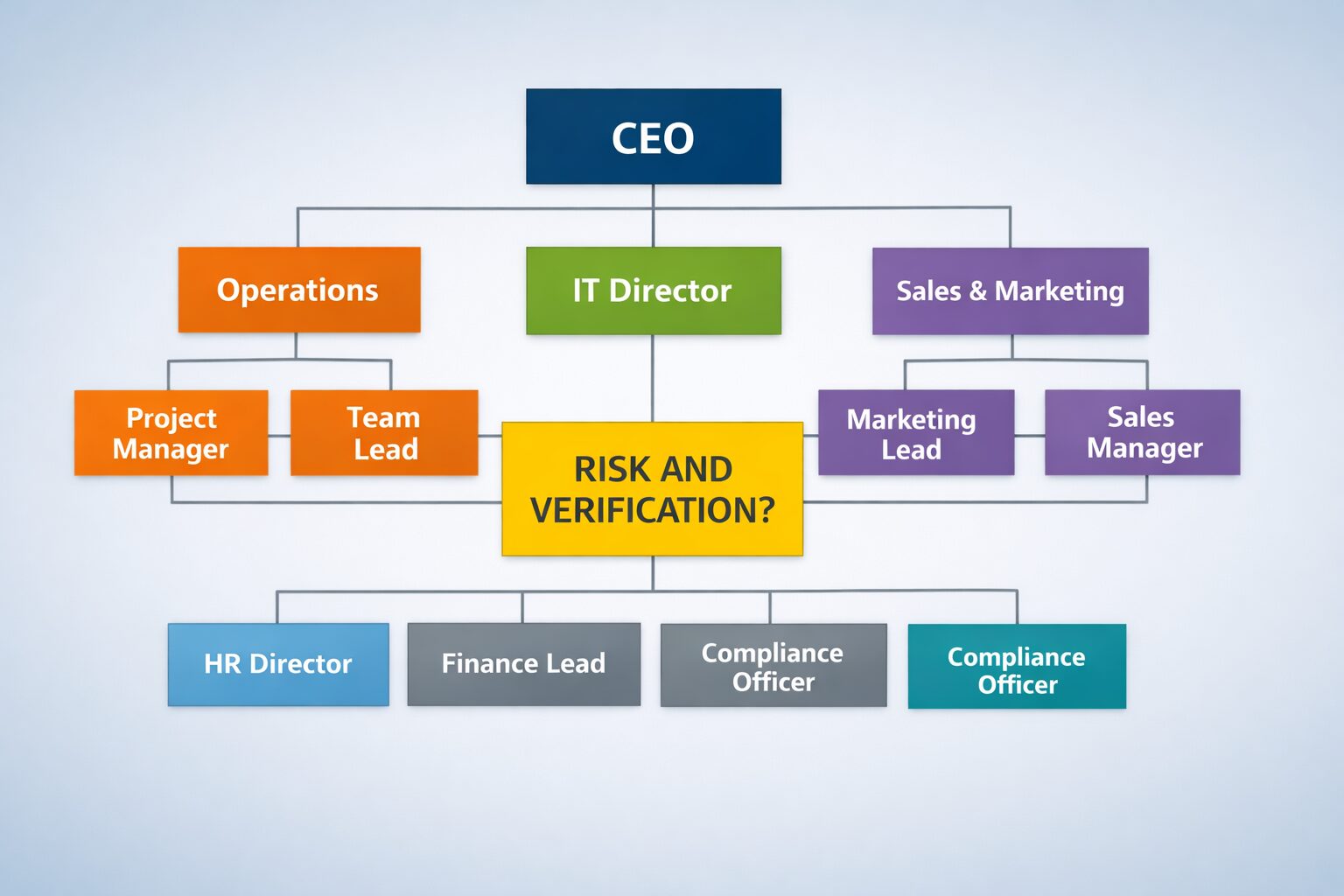
Once upon a time technology change moved slower, because constraints forced discipline. Release cycles were longer, security work was treated as infrastructure, training and testing were part of the cost of doing business, not optional steps you skipped.
Today transformation arrives as a series of urgent declarations like digital transformation, automation and AI. Each shift is framed as existential, as if hesitation is a form of failure. Over time, urgency becomes the culture and planning becomes the casualty.
At that point, the question is no longer, “What is the strategy?” The question becomes, “What is it this week?”
From Strategy to Scapegoat
Most organizations do not collapse because a tool exists. They collapse because leadership treats tools as a substitute for structure.
Goals remain vague, ownership remains unclear and risk is treated as an afterthought. When results disappoint, the narrative becomes predictable and things get said like:
- People are resisting change.
- The organization moved too fast.
- The company did not innovate enough.
- Artificial intelligence was not ready.
These are not root causes but are shields.
The Trickle-Down Reality
When technology initiatives fail, consequences do not distribute evenly. Customers absorb the failure first through degraded service, confusing processes, delays and denials with no human recourse. Workers absorb it next through escalations, blame, workload spikes and targets built on assumptions that no longer match reality. Leadership often experiences the failure last, primarily through reputation risk and performance metrics.
That is why scapegoating is so effective. It protects the people with the most authority and burdens the people with the least. Failure is rarely a trickle-up event. Let’s look at the Equifax incident of 2017 to understand how technology failures often hide poor execution and lack of leadership.
The Reality of Equifax
2017, Equifax experienced a breach that exposed 147 million consumers data. This data included Social Security numbers, dates of birth, license numbers.
The technical entry point is well known but Equifax stated that attackers exploited a vulnerability in Apache Struts and the vulnerability had been publicly identified earlier in 2017. The more important issue is what happened inside the organization; congressional reporting describes control failures that were operational.
They describe breakdowns in patch management execution, incomplete asset visibility and weak follow through to confirm that critical updates were applied where needed. The Federal Trade Commission also alleged that Equifax did not follow up to ensure patching orders were carried out.
Equifax is what happens when security is treated as paperwork instead of accountability. A policy is not protection if no one verifies execution; that is leadership failure.
What Responsible Leadership Requires
If leaders announce transformations, new products or ventures that announcement comes with the responsibility of providing structure and accountability; not just action. You need things in place such as:
- Governance and guardrails established before launch.
- Defined ownership for risk, implementation and verification.
- Transparent retrospectives with documented lessons learned.
In the End
Innovation should be for the betterment of something, not just trend compliance. When transformation is driven by optics instead of governance, the organization does not modernize, it destabilizes; which causes not only brand damage, brand equity loss but consumer as well.
_________________________________________________________________________________________________________________________
Shaunta Garth is a Strategic Communications & Visibility Architect specializing in digital storytelling, media strategy and public affairs.