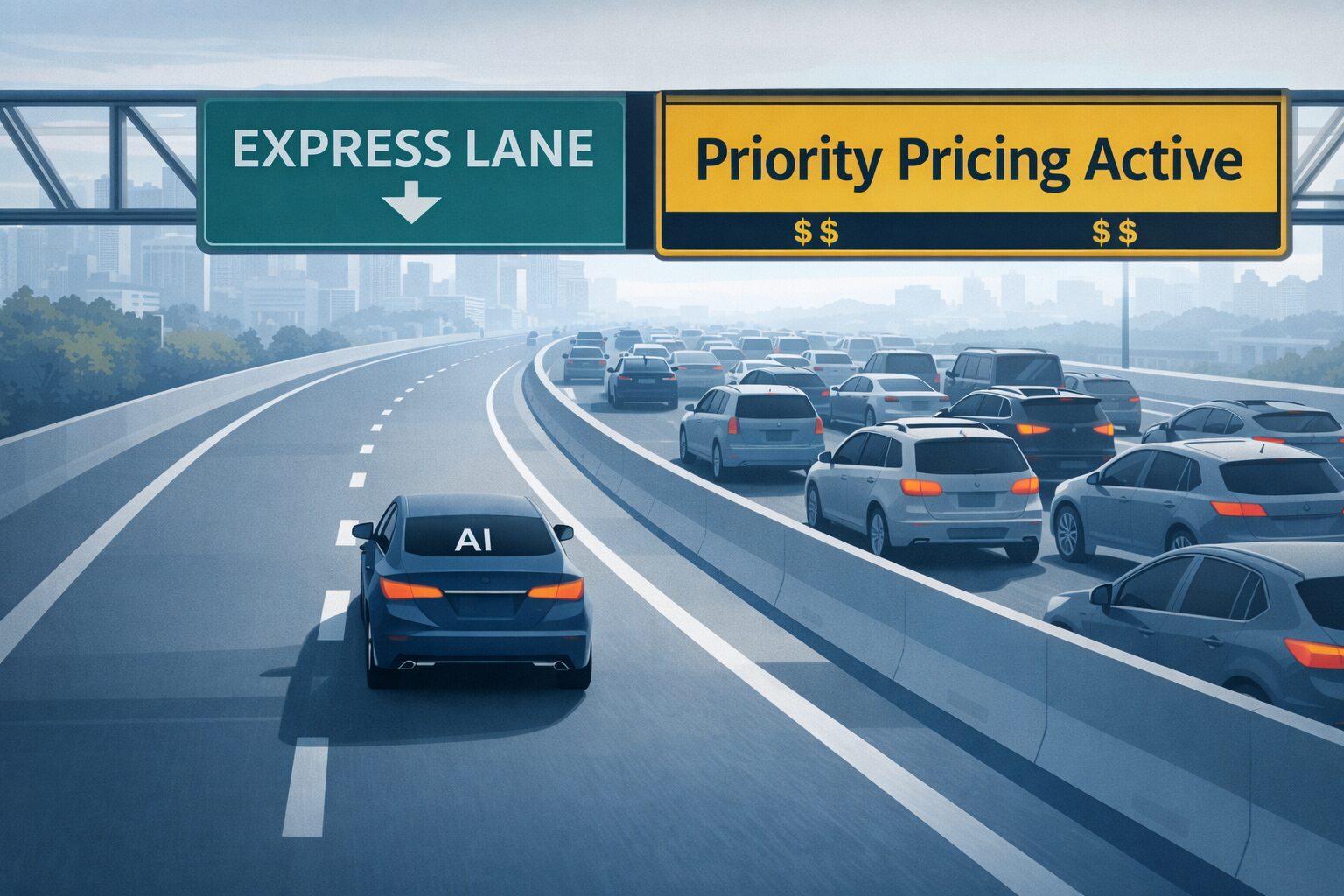
Apple did not post a weak quarter, they delivered strong results and demand is not the problem. The problem is what is happening underneath the numbers: the AI infrastructure boom is changing who gets served first and Apple is starting to feel it in the places that matter most, chips and memory.
On the earnings call, Tim Cook acknowledged that memory pricing is rising and that supply constraints are becoming more apparent as they move forward. Apple is failing, but that Apple is no longer automatically first. If Apple experienced discomfort and a squeeze in the market because of the growth of AI, what will the consumer impact in various industries.
What the reporting is really saying
The story is simple: memory and chip pricing is moving and Apple is not immune. Apple has acknowledged that memory pricing is rising and that it can pressure margins in coming quarters.
Analysts are openly talking about how large these moves can get. Some forecasts in the reporting describe DRAM prices potentially multiplying from 2023 levels with NAND also rising sharply.
If you want a single number that makes people sit up, it is this: memory costs alone can add meaningful dollars to the cost of a base iPhone model, which is not nothing when you are trying to protect margins and keep pricing stable.
This is also why the supply chain hierarchy matters. When Nvidia can surpass Apple in influence with Taiwan Semiconductor Manufacturing Company, it tells you that AI workloads are not just another customer. They are becoming the customer that gets served first.
If Apple is being told they are not first, then what do you think that means for everyone else?
This is not a chip issue. It is a priority issue.
People keep calling this a “chip shortage” story because chips are easy to point at. Chips have price tags.
But the real shift is priority allocation.
- Who gets first access to capacity.
- Who gets the best pricing.
- Who gets engineering attention.
- Who gets the earliest shipments.
If the buyer with the deepest relationships and the cleanest execution discipline can feel the squeeze, then the rest of the market is not “fine.” It is next.
The Priority Tax, explained like real life
If you have ever tried to buy concert tickets, you already understand. Bots grab the best seats in seconds, everyone else shows up and pays the markup. Then we get told, “that is just how it works now” and “nothing can be done”; that is the Priority Tax.
Except the seats are chips, memory and compute capacity and the markup does not just show up on a ticket.
- It shows up in your laptop price.
- It shows up in your upgrade cycle.
- It shows up when “new” hardware feels less impressive than it should for the money.
More expensive for less impressive. That is the consumer symptom of a market that is serving somebody else first.
Ripple Effect
Do you think this stops at chips and memory? No, because this is the part communities are about to inherit. AI is not just software. It is industrial consumption packaged as this century’s industrial era.
It pulls on physical systems:
- components (chips, memory, servers)
- electricity (constant load, not occasional load)
- cooling (heat management, infrastructure, sometimes water)
- land and permitting
- specialized labor
Data centers run on power and when power demand rises faster than infrastructure upgrades, strain shows up as cost. Somebody has to fund the upgrades, pay the higher rates and eat the reliability risk.
That is why this evolves to communities from tech. If Apple a 3.82 market cap valued company is having issues with the supply due to AI, then what would an area experience when a data center pops up in their area when it comes to power?
One question decides who gets stuck with the Priority Tax
Before any community celebrates a ribbon cutting for a data center, there is one question that should be asked out loud: Who pays to upgrade the grid?
If the answer is residents, then the Priority Tax has officially moved from checkout to your monthly bill and once that happens, people will realize too late that they were not negotiating a “technology investment” but a utility burden.
If leaders approve these deals, they owe the public more than excitement.
- They owe transparency.
- They owe hard numbers.
- They owe enforceable commitments.
Things the public should be made aware of before approvals:
- expected power draw and peak load behavior
- cooling approach and local resource impact
- full infrastructure impact assessment
- who pays for upgrades, in writing
- what triggers expansion limits or new approvals
If the plan is infinite growth on finite systems, then we have a serious problem down the road.
Resource Allocation
AI does and gives a lot of results but there is a lot that goes into getting that; such as: chips and memory, yes. electricity, cooling, land, and infrastructure. When resources become priority-gated, the bill does not disappear, it travels. If Apple will experience issues, imagine the priority tax communities who house data centers will be forced to absorb. If we do not define limits, the market will define them for us. When it comes to priority tax you will see it in the increase in price of your device whether a computer or phone and in the case of data centers your electric, water and tax bill.
_________________________________________________________________________________________________________________________
Shaunta Garth is a Strategic Communications & Visibility Architect specializing in digital storytelling, media strategy and public affairs.