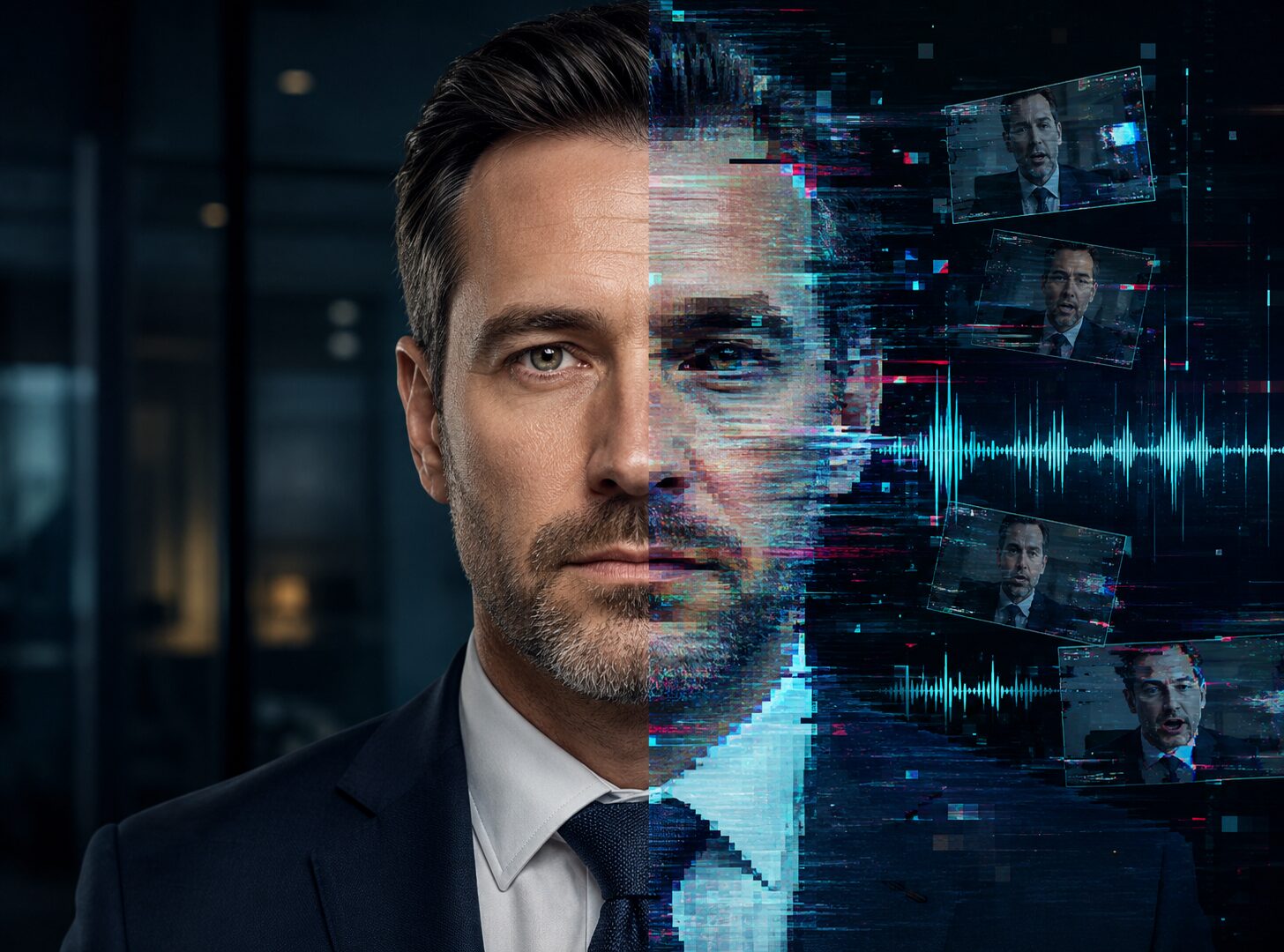
In comms, there is always plenty to worry about; the messaging, the reputation and the trust. Then something new comes along that is not mentioned or considered to be a concern. In this case that would be corporate deepfakes. This is not a cybersecurity issue, this is a communications issue and people are not actively acknowledging it.
AI can clone your voice from an old interview; it can pull video clips that have been sitting online for years and turn them into something you never said. By the time you find out, it has already reached people you cannot get to. That is why the plan has to be in place before any of this lands at your door and not after.
A corporate deepfake is AI-generated audio, video or imagery that impersonates a real executive, employee or company communication to spread misinformation. It looks real, it sounds real and it can move through media and social media long before anybody has verified a single thing.
How Prepared Are Companies Really?
The data on this is uncomfortable and there is a real gap between what leadership thinks is in place and what is actually built out. Most companies do not have anywhere close to what they would need if something hit tomorrow.
The Oxford Globescan Corporate Affairs survey put numbers on it. Only 18% of corporate affairs functions said they were prepared to manage a deepfake or AI-driven misinformation incident; 43% said they were not very prepared. In North America, that prepared number drops to 11%. Consumer product retail was the lowest at 8%. Read those numbers again, that is the industry telling on itself.
Why Is Reactive Comms Not Enough?
Most brands work reactively when something happens; then they assess and then they figure out what to say. That approach was never great but with AI-driven misinformation it is a real problem. Once something is out there, it spreads like wildfire.
You are not just dealing with regular social media spread anymore. Social platforms amplify it, AI picks it up from there and now the story has its own momentum that your assessment cycle is not built to catch. By the time your team has confirmed what is true, the narrative has already been written for you by people who did not have the facts. Proactive is not optional anymore, it is the cost of operating right now.
What Are the Real Risks?
Corporate deepfakes do not show up as one clean problem. They show up in different forms, and each one can damage trust in its own way. Here is what to plan for.
- Fake CEO audio or video. Employees, investors and media may believe it is the real thing. That hits brand reputation, share price and internal trust all at once.
- False claims spreading before verification is done. Misinformation can take hold while your team is still trying to figure out what actually happened.
- Fake instructions. This is where it gets into security territory and it eats away at public trust in everything you communicate after.
- Slow verification read as a cover-up. Silence gets interpreted. If you take too long, people will fill in the blanks for you and they will not be kind about it.
- Premature denial that ends up being wrong. If you deny too fast and the facts, come back incomplete, you lose credibility twice. The deepfake hits once, the bad denial hits again.
How Do You Build a Real Plan?
A real plan is not a document that lives in a folder somewhere. It is monitoring, verification, response language and clear roles, all of it built out before anything happens. Here is what that looks like when you actually do the work.
Monitor Constantly
Be monitoring for media involving the heads of your company. Be monitoring customer claims, financial claims, safety claims, regulatory claims. If you only start looking when something goes wrong, you are already behind and you are going to be playing catch-up the whole time.
Verify Fast
Now is not the time to be doing the telephone game. Have a designated person or persons across comms, cybersecurity, legal and investor relations who can confirm information directly at the source. You need to know exactly whose mouth the verified information is coming out of, so when you respond, you can respond fast and you can respond accurately.
Pre-Approved Response Language
Have pre-approved statements, employee guidance, media lines and customer-facing language ready before any of this happens. You do not want misinformation spreading while your side stays silent for 24 to 48 hours. At minimum, your voice needs to be in the conversation. People need to see that you are on it, that you are tracking it, that you are not hiding from it. Silence in the middle of a storm does not read as neutral, tt reads as guilt.
Right Pathway for Each Issue
Different misinformation needs different responders. If it is financial, your financial analyst leads. If it is customer-related, it is your Customer Relations Affairs or customer service manager. If it is internal, HR or executive comms steps in. The point is that somebody owns it and that ownership is decided long before the incident, not while it is happening.
Keep the Playbook Updated
Have a playbook, and keep it current. Monitor the teams. Make sure everyone knows their role, their protocols and the spokesperson tied to each scenario. When something happens, nobody on your team should be asking what to do. They should already know because the playbook told them. That way you are not caught with your pants down trying to figure it out in real time while the clock is running.
Is Deepfake Detection Available Yet?
Detection tech is advancing, but it is not ready yet. Companies like Reality Defender, Resemble AI and McAfee are building tools designed to catch what your eyes cannot. The problem is they are still catching up to the same technology they are trying to detect. That work matters, and at some point, it will be reliable enough to be a real layer in your response. We are not there today, though.
And that does not get anybody off the hook. The technology not being ready does not mean your brand cannot be ready. Those are two different things.
What Should Comms Leaders Take from This?
Deepfakes can destroy a brand in minutes. The creation of fake audio or video of a company leader is not a future problem; it is happening right now. The companies that come through this shift in one piece will not be the ones with the most expensive technology. They will be the ones who actually prepared.
Trust takes years to build and minutes to lose. If the plan is to figure it out when it happens, you do not have a plan. You have a hope. Hope is not a communications strategy.
Frequently Asked Questions
What is a corporate deepfake?
A corporate deepfake is AI-generated audio, video or imagery that impersonates a real executive, employee or company communication. It can be built from old interviews, public videos or audio clips already floating around online. The goal is to mislead employees, investors, media or the public. And it can do real damage to a brand before anybody confirms it is fake.
How fast can a deepfake damage a brand?
Faster than most companies can respond to it. Once a fake video or audio clip hits social media, AI picks it up and the spread accelerates. The damage to share price, employee trust and public perception can happen in hours. That is why the response plan has to be built before the incident, not during.
Are most companies prepared for this?
No, and the data shows it. The Oxford Globescan Corporate Affairs survey found that only 18% of corporate affairs functions said they were prepared. In North America that drops to 11%, and consumer product retail came in at 8%. Most companies are still operating reactively, and reactive does not work at the speed AI moves at.
What should you do first if a deepfake of your company surfaces?
Do not deny it before you have the facts. Also do not stay silent for 24 to 48 hours while you assess. Get your designated verifier on it immediately, whether that is comms, cybersecurity or legal, whoever owns that pathway in your plan. Use pre-approved holding language to show that you are tracking the situation. Once verified, respond directly and respond clearly.
Can deepfake detection software stop the problem?
Not yet because companies like Reality Defender, Resemble AI and McAfee are building tools designed to catch manipulated content before it spreads. The tech is promising but it is not there yet. Which means the first line of defense right now is not a platform or a product. It is your team and how prepared they are when something hits.
Why is silence dangerous during a deepfake crisis?
Because silence gets read as a cover-up. If misinformation is spreading and your side has nothing to say for a day or two, the public fills in the blanks for you. That is how trust breaks. You do not have to have every answer right away, but your voice needs to be present in the conversation, showing that you are on it and that you are taking it seriously.
I am an executive communications strategist with experience in government, media and corporate organizations. I write about AI, the workforce and what responsible communication looks like when technology moves faster than people are ready for.