In the 1950s to 1960s, KPIs were determined by sales volumes, market share, and brand awareness. Popularity was determined by a product’s household penetration, store traffic and distribution. In the ’70s, KPI’s were determined by sales growth, the market share, reach, frequency, purchase intent of the user, their response to the product and distribution. In the ’80s, revenue growth, market share, brand awareness, advertising recall, use frequency and repeat purchase. The 90’s brought in direct mailers which resulted in a new metric of conversion. Customer retention became a factor because it determined the frequency of them visiting your store. In the 2000s the digital era began and things like web traffic, page views, unique views, impressions, the click-through rate of newsletters, email open rate and conversion rates were tracked. Once we got into the social media era, engagement, reach, impressions and followers became important indicators, while conversion rates, cost per acquisition, customer acquisition and lead generation became models of measurement for success. Now we are here with what is the customer lifetime value or what is the churn, the customer journey and recurring revenue.
From 1950 till now, there are over 76 years of commonly emphasized KPIs, but what weight do they truly have when it comes to a brand, a product, or a message? Can you truly measure what success is by one defined metric without accounting for variables?
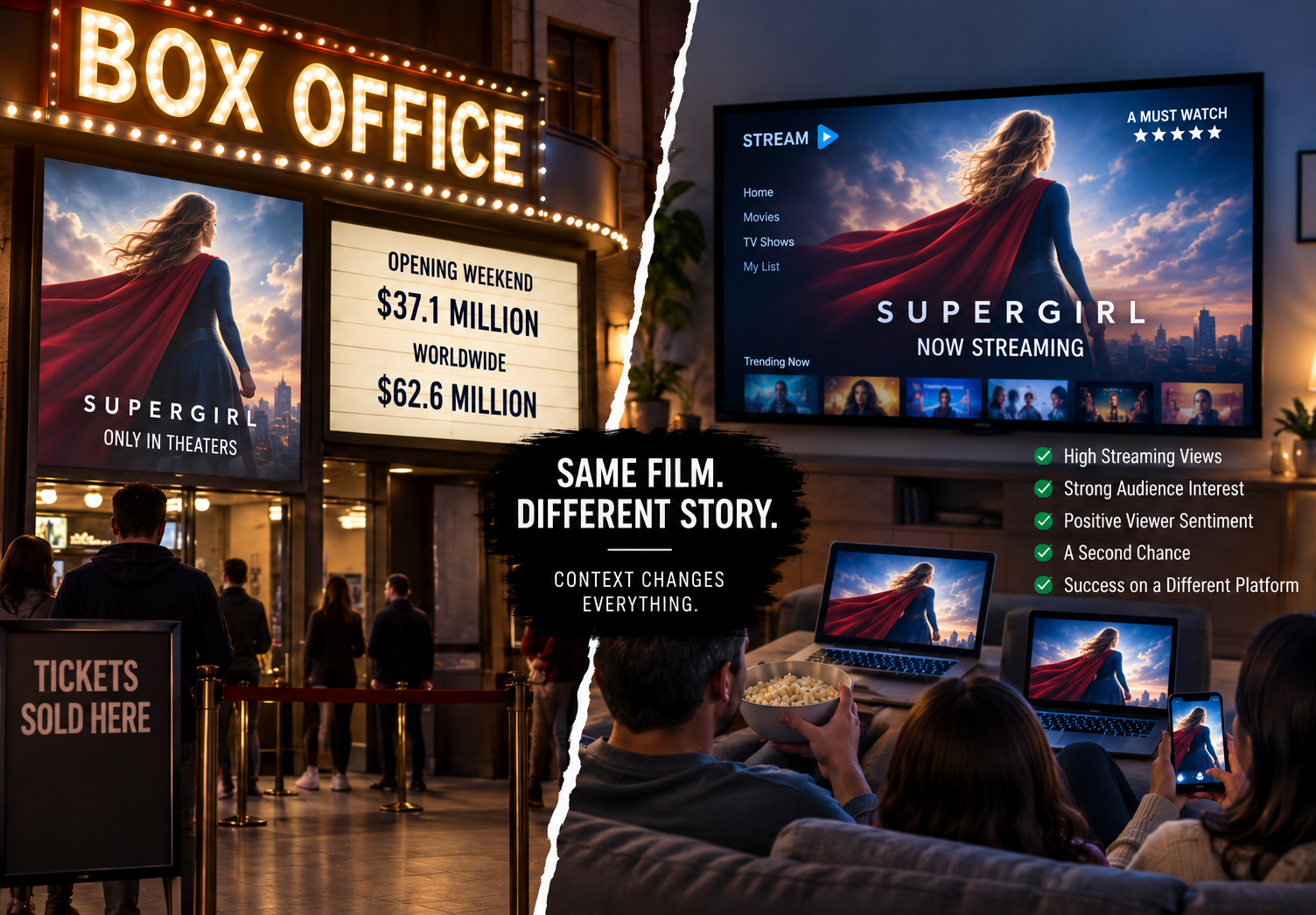
A good example of this can be illustrated by the 2026 Film Supergirl. Supergirl had a Rotten Tomatoes score from critics of 53%; this consist of a mix of negative and positive reviews. If the score were in the 70s or 80s it would have been a strong positive sentiment about the film. Now the audience score was 72% in favor of the film; which means they generally favored it. The problem was the film cost $170 million to make and $120 million was spent on marketing; in total $290 million was spent on the film. During its opening weekend domestically, it made: $37.1 million and by the end of the weekend worldwide it had made: $62.6 million. Warner would need $315 million worldwide to break even and they projected that they will have a loss of $125 million. The audience satisfaction of the movie was ok but you need more than ok. Satisfaction translates into word of mouth, which can lead to more people going to see the film.
Supergirl was considered a disappointment based on its box office but recently it was released on streaming services and it was a huge success. Here are some things that were not considered when looking at why Supergirl did not do well.
- Toy Story 5 was released on June 19 and it had a great opening weekend.
- Toy Story 5 weekend carried over to the second weekend which was June 26; the weekend Supergirl was released.
- In the second week of Supergirl’s release, it went up against Minions and Monsters.
- Each weekend Supergirl failed to reach number one, it fell further down the charts. In week one, the movie was number two, in week two it was number four and by week three it was number eight. Word of mouth about the film was not favorable, and the low box office numbers combined with heavy competition from Toy Story 5 and Minions and Monsters essentially screwed with its release.
The focus on the box office numbers created an environment where the film was judged almost entirely by its revenue, not to mention the impact of improper scheduling. To schedule it against juggernauts like Toy Story and Minions and Monsters was risky and it did not pay off.
The metric in this case was revenue but should success be determined by revenue alone? Currently the film is on streaming services and it is drawing in huge numbers. This brings up a ton of questions. 1. Was the audience not interested in seeing it in the theater? 2. How much weight did opinions on and offline have with people going to see the movie? 3. Was it wise to put it up against established franchises? Each of these questions carries a different answer and a different weight. The box office tells one story, meanwhile the streaming numbers tell another. This is why one metric alone cannot give you a complete picture of what is a win with the audience and what is not.
Frequently Asked Questions
- What is a KPI and why is it important?
A KPI, or key performance indicator, is a measurable value used to determine how well a product, brand, campaign or business is performing. KPIs can include revenue, market share, engagement, customer retention, conversion rates and customer lifetime value. The challenge is that one KPI may show what happened without fully explaining why it happened.
- Can one KPI accurately determine whether something is successful?
Not always. One KPI can provide valuable information, but it may not account for outside factors such as competition, timing, pricing, audience behavior or distribution. Looking at multiple KPIs can provide a more complete picture of performance.
- Why was Supergirl considered a box office disappointment?
Supergirl was considered a box office disappointment because its theatrical revenue did not match expectations based on its production and marketing costs. However, factors such as competition from other major films, release timing, word of mouth and audience behavior may also have influenced its box office performance.
- Can a movie fail at the box office but still be successful on streaming?
Yes. A movie can perform poorly in theaters while still attracting a large audience on streaming platforms. This can suggest that viewers were interested in the film but preferred to watch it at home rather than pay for a theatrical experience.
- What KPIs should brands use to measure success?
Brands should consider multiple KPIs based on their goals. Revenue may be important, but other measurements such as engagement, customer retention, conversion rates, brand awareness, customer lifetime value and audience response can provide additional context. Success should be evaluated using the metrics that best reflect the behavior and outcomes the brand is trying to achieve.
I am an executive communications strategist with experience in government, media and corporate organizations. I write about AI, the workforce and what responsible communication looks like when technology moves faster than people are ready for.